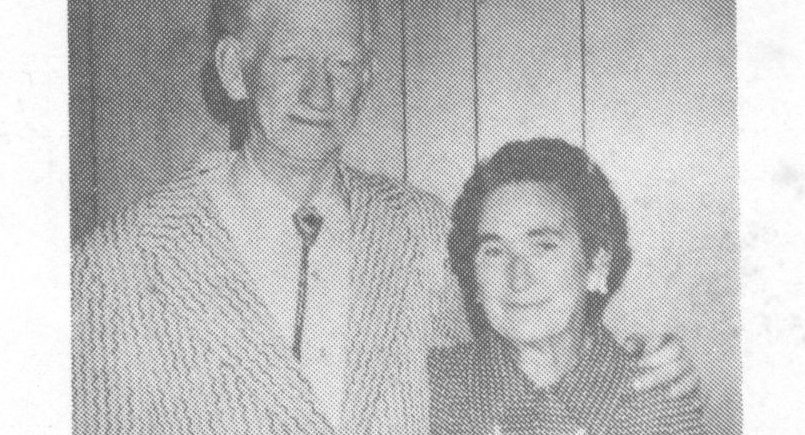
Here is a Dana People Picture Book.
These are bits and pieces from the Dana line.
. Edward’s Story WW2 . . Max’s Story WW2 .
. Dana Lee Life Sketch . . Dana Valerie Life Sketch . . J Taylor-S Best History . . Wm Taylor-Eliz Patrick .
. Personal Record Sheets of the Lee Dana Family .
Life sketches of Lee Dana and his ancestors.
. . Chauncey Dana.
. Edward S Dana. . Nellie Clark. .
. Lee Dana.
. . Nellie Knight. . John H Knight.
This is the story of the Knight ancestors and how they combined with the Danas. Dana-Knight Story .
Here is Lee Dana’s Life Sketch. Dana-Lee Life Sketch.
Here are the files for Evelyn’s parents:
Some reminiscences:
– .
Edward:
>- Book of Awards. >- Pictures of Family. >- Art Pieces. >- Edward’s Keepsake Objects.
Shirley:
J- Address Book 2001-2012. – Shirley’s Life Story.
– Journal 1963-1967. – Journal 1988. – Journal 1988A.
– Journal 1990. – Journal 1991. – Journal 1999a.
– Journal 2002. – Journal 2003. – Journal 2004.
– Journal 2005. – Journal 2007. – Journal 2010a.
– Journal 2010b. – Journal 2014-2015.
Looseleaf Books:
– Knight-Bradshaw Book. Our Mission 1989 Book. Bruce Giles Book.
Chauncy:
 .
.
Here is the story of the blizzard, as told by Lee Dana:
THE STORY OF THE BLIZZARD
We’re here in Loma, Montana, looking at pictures, & I, Leland F. DANA, would like to talk about the time we were in that awful blizzard, & we had to walk so far in the snow. This happened in the fall of 1947. [It was November 8-10, Saturday through Monday, 1947.] We were in Wyoming working over around Sheridan & Buffalo. Anyway, we got over in Gillette on a job, & we worked there for a couple or three weeks. Ken & I & Max — we just came in there from Idaho from hauling phosphate. They shut it down; they didn’t shut it down, but they were putting a railroad in, & they wouldn’t keep the roads up. It got so dusty we couldn’t work. So we moved to Wyoming & got out in this little town called Savage, Wyoming, 40 miles from nowhere. It did have a post office & a grocery store combined, & we lived 14 miles, I think, or even more, from that post office, & this day was a beautiful day, & they were moving the crusher down to where we had the tent pitched. And we were supposed to work there ’til freeze-out. And we decided to go in & get the mail & get a few groceries — not that we needed groceries — we just got a few groceries. We went in there, & on the way in (I’ve never been able to shoot an antelope out of season.) but also, out of nowheres, (And the postmaster says after the season closes up, just help these antelope; we’ve got too many of them.) [came] 16 antelope, underneath this bridge. And I shot about three times, & got three of them. I didn’t aim, I just shot into them. And we dressed two of them out. The other one was all gut-shot. We thought we would get it on the way back. So we went into Savage & got five gallons of gas (maybe not — we usually got gas from the company). We got a few cans of [evaporated] milk, some peanut butter, & some bread. And really, not much to eat.
And, on the way home, a wind came up. Ken was with us. We had visited Max in town. We were in Ken’s new Oldsmobile. That’s what saved our life, was that new Oldsmobile. Brand new. But anyway, a storm came up. Wyoming’s a funny country around Gillette there. And within minutes, it snowed — just snowed & snowed, I’d say 2 or 3 inches deep. But that don’t mean nothing. In Wyoming, the wind comes up, & the first thing you know, we was bucking three-foot drifts. We got out & we put chains on. We had the snap-on chains. They weren’t worth nothing, when you’re going anyplace. And we kept bucking these snowdrifts & snow & blinding & we stopped & put the antelope on. If we hadn’t had finished dressing the other one, who was out there quite a ways, we’d probably have got home to the tent. We got within a mile of home. The chains went out; the rear wheels got stuck. There was three feet of snow on the road. It seemed to pile up on the road. Well, then it was dark. And we had these antelope in the back, against the law. It kept blowing & snowing. Pretty quick, it was 10 o’clock. So we had to do something with the antelope. We got them out by the side of the road there, about ten feet from the car. And there we were for the night. And it blew all night, & snowed. Next morning, the snow was to the top of the car, on both sides. Only thing was, the wind kept it away from the car — oh, about three feet on one side, & not that much on the other, I’d say. And on the other side was where we had the antelope buried, so they were safe.
But even in that new car, the wind would come in there & make drifts on your feet. And we — every 20 minutes or half-hour, we’d start the car to keep from freezing. And we didn’t know how long we was going to be there, but we were in there for two nights & a day, eating peanut butter & canned milk — no coffee, no nothing. A plane went down over in the mountains somewhere around there in Wyoming, & it was telling alot about these people stranded up there. They were alive, but they couldn’t get to them — no way. We were thinking about them freezing to death. Anyway, the next morning we got up & cattle had froze[n] to death. The calves froze to death. It didn’t seem to bother the cows. But it even got them, before it got through, ’cause on that night — that next day, at 10 o’clock, we was out of everything, & Ken & I said we’d leave the women there & the baby, & dash & get a truck.
So we did. We followed that fence line down. Threw a quilt over our head & got to camp, & made a pot of coffee, got the truck started — & that Wyoming’s nothing but big gullies — washouts. We put chains on the truck & had a full tank of gas & even then, the road was out. We ran it fast across there to hit them drifts, & jumped one of them gullies. We got clear across except the hind wheels got caught. There we was, right in mid-air with the truck. Well, we worked, & jacked, & worked, & finally got that truck up where it’s supposed to be. And then it was dark, & the family was still a mile away. So we kept a-bucking the snow. We bucked it & bucked it until 10 o’clock that night. And I said to Ken, “I’m afraid we won’t get there with the truck. I’;; go see if the family is alright.” So I went ahead afoot. Everybody was alright — they never left the car. Ken got to within 300 feet with the truck, & ran out of gas. It took 50 gallons of gas to go a mile & a quarter. So there was another night, there. The next morning, we thought the wind had gone down a little. It quit snowing, but the wind was still terrific. We bundled the kids up, LaRue was pregnant with Guy, & I packed Marva, & Ken tried to pack Layne, but he didn’t want nobody to pack him but his mother. But pretty quick he got so cold, he was wrapped in a quilt. Even with the wind coming through that quilt, he went to sleep — it put him out. And then Ken took him. We didn’t know whether he was dead or alive ’til we got home & got in the house. It was so cold that night, that even in the tent, boarded up, it was cold. We had a big oil stove, & it would be red hot & you’d stand by it to get warm, & your back would freeze. You had to just keep turning around to keep from freezing to death. But the next morning, it quit, & let up, but we had drifts that you wouldn’t believe. It covered barrels up; covered tents up; covered the shop up. And we didn’t get — Max, he was stranded in another little town with his truck. He didn’t get to come home until it was all over. And he went to cross a road. The roads hadn’t been cleared. There was a big cat there, & he looked like he had good sailing, & he got a big run down this hill to cross, & went & buried the truck right on the road. So he had to walk three miles to camp. We had quite a time.
It was three or four days before we could get back to dig them antelope out. We was afraid that the law was going to get them. The snowplow could’ve plowed them out. Anyway, we had them out on the road there. But that’s the first antelope I ever got — for meat — because we needed it, I guess. We were pretty well stranded there.
Well, that ended the job. Soon as we could, we got moved into Gillette, & spent the winter there. Well, we never worked another day. Supposed to haul phosphate the next spring, & they tried to, but the snow was ten feet deep up at the phosphate place. Ken & Max took the two Whites & went up there. Had to catch fish in the snow for three days to get them up there. Got on the road & went like bobsleds down that mountain. That ended the phosphate for that year. We never hauled any more. It was a promotion deal. Spent everybody’s money to build a mill, & there was no phosphate — only a vein, about wide enough, like gold, instead of phosphate. Broke alot of people in Utah & around that country there. So that ended that.
This was about in November, & they kept telling us that a week, & a week, & after two or three weeks, & we had moved to Kemmerer. They said it wouldn’t be ’til spring. So we wintered there in Kemmerer. And when springtime came, they still couldn’t get enough money appropriated to continue on this phosphate job. So we left Kemmerer & went to Coalville, Utah. There, Ken took over the truck. He had a job where they only needed two trucks. So him & another fellow, Stan Arco, went on this job, & I went down to Devil’s Slide & got on work down there. We raised a garden & got chickens & planned to stay put for a little while, & not do any more trucking. So the summer went. And fall-time came. Work was still bad all summer. Ken didn’t make too much on that truck. He called his brother back, & said that he was through trucking for a while, & he wanted to get married & do some other kind of work. This was in the fall of ’48. Guy had been born by then. Freda was baptized in September.
 Ron's Family Stories